Tag: life

  • In the Cracks

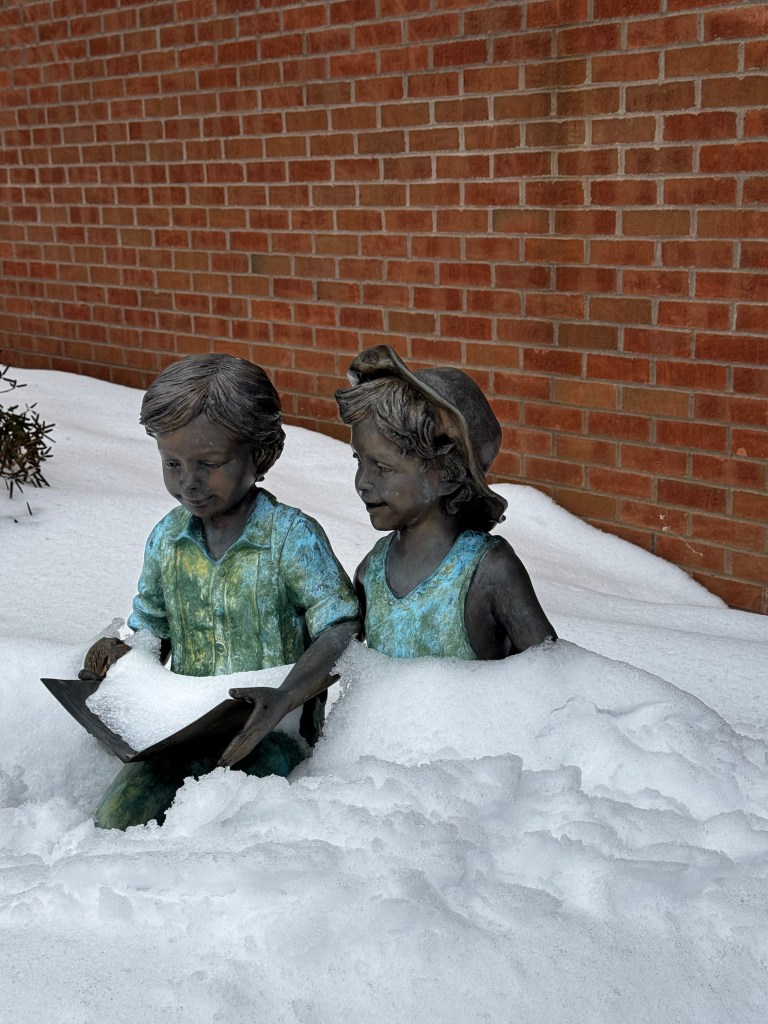
    It’s been a little over a month since we arrived in North Adams. I keep meaning to write another post, but it’s been difficult to know what to say. If I attempted to capture all the feelings I cycle through each day — not to mention over the past month — this blog would be hella long and boring. (I suspect it would also read a little crazy.) Suffice it to say that I’ve been down, sad and lonely, and I’ve also been excited about the potential of the life I can imagine here. In the first couple of weeks, stress and doubts and regrets kept me up at night, but since then I have also felt enveloped in calm, as if the frequent snow flurries that are a feature of life here have affected my nervous system, enveloping my spirit in a soft blanket of papery flakes, muting my worries.
    When I first moved to the Bay Area and missed New York something fierce, I would call to mind something Alexandra told me when I first called her to rent her house on Tyler Street as our landing pad. “They’re apples and oranges,” she told me over the phone after I dumped my stress about our impending move on a (then) total stranger. “If you try and line them up and compare them, you’ll be disappointed. The key is to appreciate each one for its special qualities.” I think about Alex’s words of wisdom a lot these days. Comparing Berkeley and North Adams is more like comparing a rutabaga and a mango, but nonetheless each of those foods has its own merits.

    Construction has begun on our upstairs bathroom and we are deep into the planning process for our kitchen and entryway, which hopefully will be completed by fall. For the time being, Owen and I reside in the in-law unit, and it feels a little like we’ve gone back in a Time Machine and living like college students.

    Speaking of college, one of the things that offsets the loneliness I feel is the intellectual stimulation I’ve experienced since we landed here. North Adams is small and, especially this time of year, sleepy, but between this town and the next town over, Williamstown, home of Williams College, there is some interesting cultural event almost every day.

    We’ve seen an astonishing dance piece by choreographer Shamel Pitts called Marks of RED (we loved the open dress rehearsal we attended so much that we already bought tickets to the performance in Boston in May);

    Watched the Oscar Shorts at a small movie theater where everyone talked to each other before the lights dimmed and saw a weird-ass Japanese anime called Paprika at a free screening at Williams that was introduced by a comparative literature professor and a neuroscience professor;

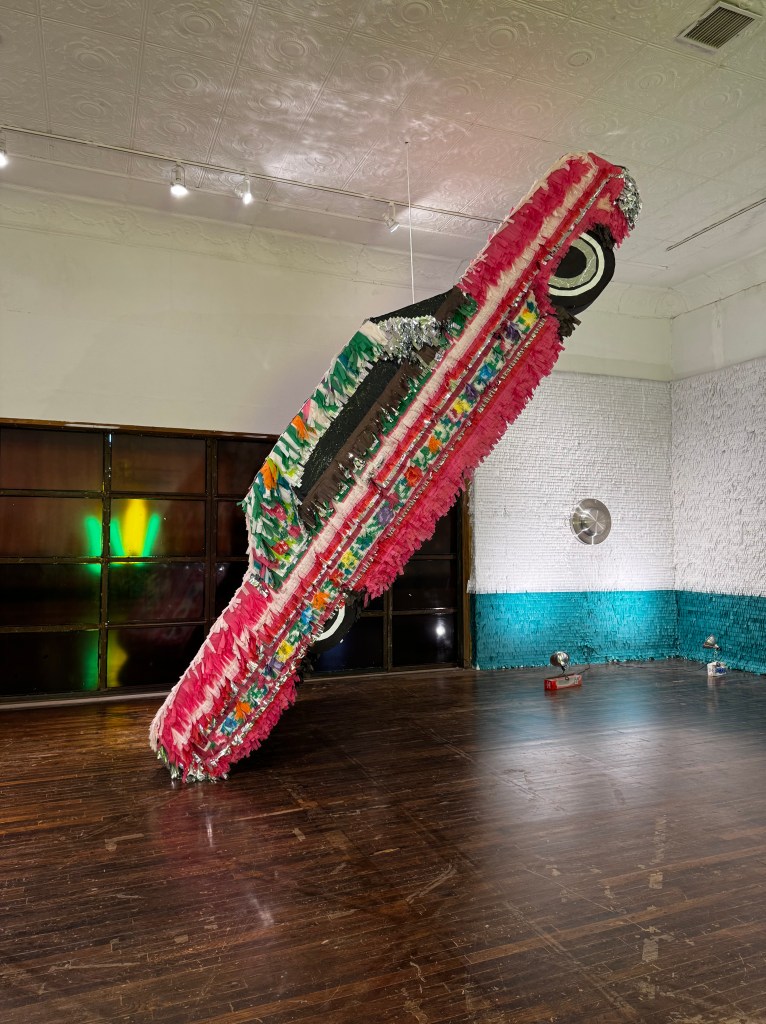
    Accompanied our friendly neighbors to the local First Friday event where we visited two wonderful galleries, one of which was presenting a glow-in-the-dark seascape and the other which is curated by an incredible artist, Alison Pebworth, whose show at MASS MoCA is a balm for the soul

    Attended a day-long symposium at MASS MoCA called “Tending the Garden,” with a keynote by Báyò Akómoláfé, a lawyer turned “public philosopher” who is one of the most mesmerizing and dynamic public speakers I have seen in recent memory. We were invited to attend the dinner for the presenters in the evening, a Vietnamese feast cooked by a chef who’s a fellow California transplant, and which was served under the twinkling lights of artist Spencer Finch’s uplifting “Cosmic Latte” installation.

    I am pretty sure everyone who reads this can imagine what has pulled me down. Apart from missing my people something terrible, the cold and bare trees and isolation and loss of my biweekly farmer market visits and, of course, the state of the world and stress about my family and friends are painful. But in the spirit of Alex’s counsel, I will enumerate ten things that make the rutabaga of North Adams special. In no particular order:

    1. My local friend Vanessa took me to Cricket Creek Farm, where there’s a gorgeous farm store run on the honor system. It’s going to become a staple of mine.
    2. There are AMAZING thrift stores and antique stores EVERYWHERE. I have been collecting little treasures for our home.
    3. Speaking of thrift stores, Sanford and Kid deserves its own bullet point. It’s a local institution where new wares go on sale every Friday at nine and people line up to be first to rummage through the $2 table
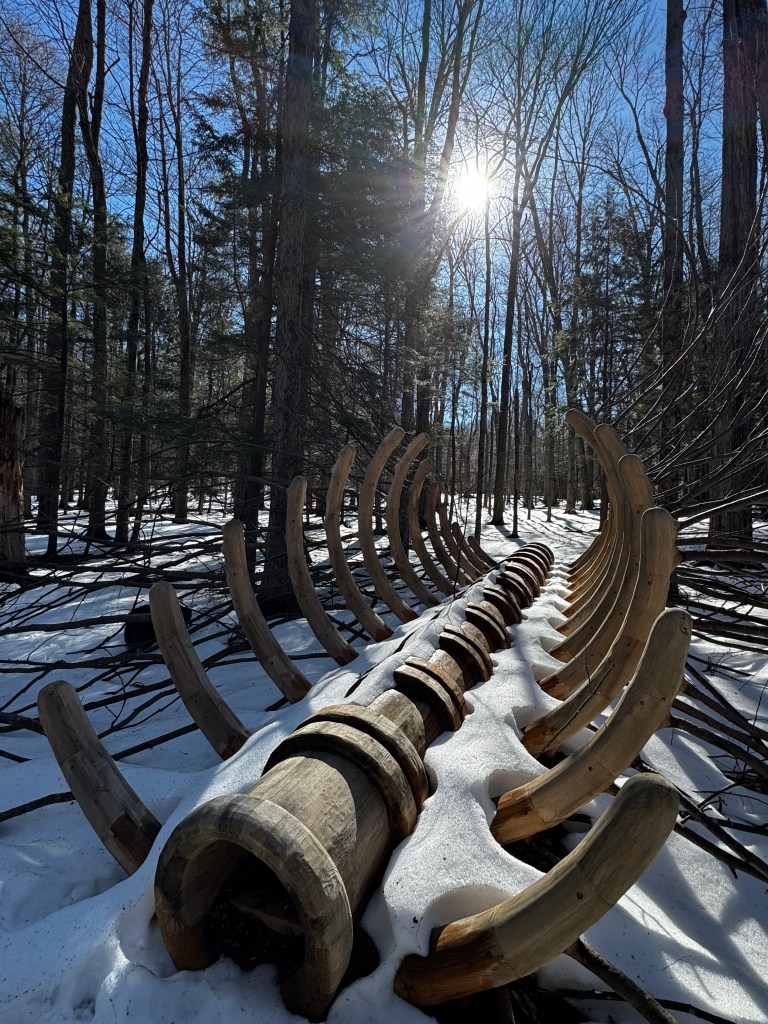
    4. The woods behind the Clark Art Institute, where you walk on trails through a whimsical fence and between beautiful tree-inspired sculptures
    5. Walking to the library, the post office, the amazing bagel shop, the museum
    6. Yoga classes with Angie Rocca, who is a talented and grounding instructor and teaches in a heated room that feels like heaven in winter
    7. Watching the snow dance outside my window
    8. Talking more frequently with Diego now that the time difference between us has shrunk
    9. Daydreaming about the potential of our house. I think it’s going to be a magical space
    10. Having a full house and hosting friends and family and anyone who wants a change of pace or to come for weeks and create

    At the talk he gave at the museum, Báyò Akómoláfé spoke about what he thinks is needed in this moment when the world seems to be falling apart. He said two things that really struck me, and I aim to put them into practice the best that I can.

    First, he said, what’s needed of us is that we all get stranger. Not angrier, or more active, or more reactive, or more trenchant in our beliefs about right and wrong. Stranger. Which I took to mean, stop letting algorithms or parties or journalists dictate what you are feeling and doing. Tap into that which is unusual or quirky or queer or wacky or silly or absurd. Resist the pressure to fit into a box or carry a label. Resist the pressure to trap you in outrage and despair. Feel what is wild and weird.
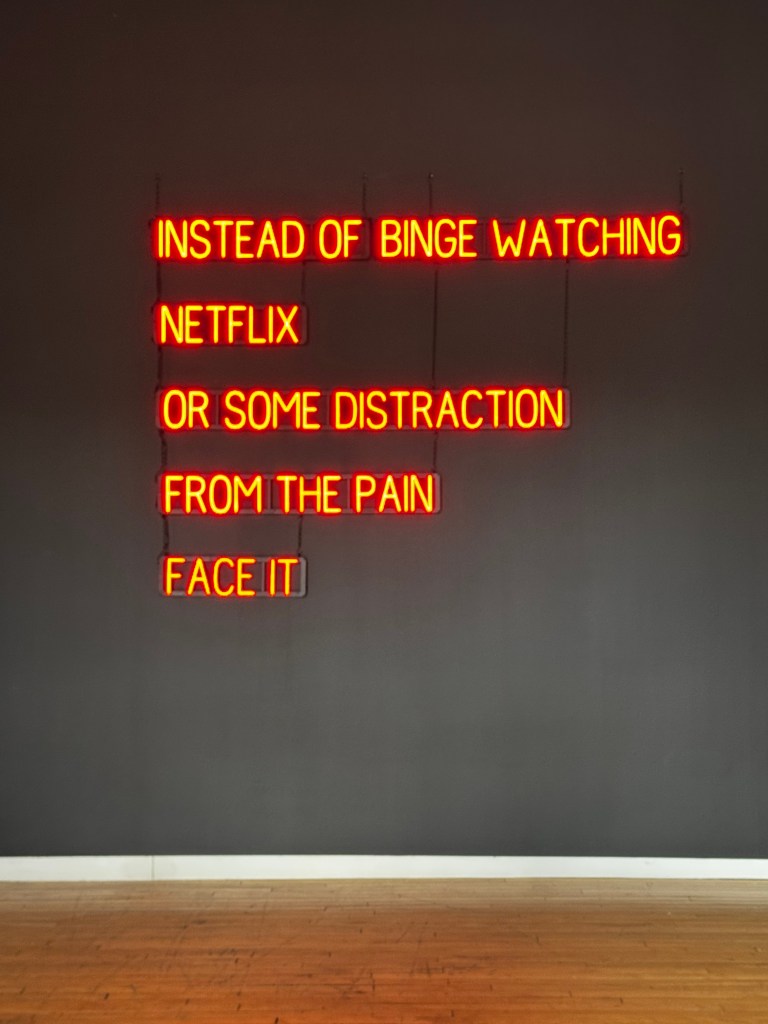
    And second, which is where I am with this whole Big Move business: Attend to the cracks. See where things seem to be falling apart, where your heart is unraveling at the seams, where the ground underneath you has opened up, and get curious. Báyò suggested lying down on the ground and peering into those cracks, which I think he meant both metaphorically and literally. And so, I lay in svasana, sensing where my body meets the planet and how unknowable I and it feel. I sit with the cracks that have appeared between what I thought my life was and what it is, or might be, becoming.

    Tell me, dear ones, how are you tending to the cracks?
    Leave a comment

  • MASS. MIGRATION

    DAY 9 MARFA > AUSTIN

    (photo of a piece by Narsiso Martinez in Marfa Ballroom)

    Some days—most days, to be exact—pass by in a bit of a blur, like seeing the countryside glide by from the car window.

    Today, we passed the 2,000-mile mark, somewhere just outside of Austin, where we are staying with Alison and Nick and their two awesome boys. The day started early, after a sleepless night for both of us. We fell asleep easily last night, but woke up around three and tossed and turned for many hours. We weren’t unhappy, but we knew we’d be wiped out the next day. I thought about the design of the new kitchen and where to hang the pictures I’d taken down from the gallery wall in the Berkeley living room.

    We finished the Beth’s Dead podcast, which I’d definitely recommend, and listened to a playlist inspired by Trinidad Senolia, a DJ duo out of Los Angeles. We witnessed the lonely Chihuahuan Desert give way to Texas Hill Country with its rolling hills and wineries and oaks, reminiscent of Northern California’s own wine region. I marveled at the infinite cloud formations, and lamented not stopping in Fredericksburg, a touristy town with a serious German vibe and intriguing antique stories and boutiques. When you’re trying to cover this much ground, you have to roll through places you’re curious about without stopping. As discussed in an episode of This American Life we listened to, this might actually be a blessing. Oftentimes, the mystery and intrigue of a thing is much more interesting than the answer or the solution.

    It’s been lovely to be with our Austin family. We got the tour of their ’60s ranch house, had a rooftop margarita, and ate A LOT of delicious barbecue. We sat outside after dinner, on a 70-degree February evening, enjoying the enthusiasm of the boys (and Owen) playing a loosey-goosey version of Dungeons & Dragons. We caught up on friends and work and changes and life.

    Remember that ear worm “Life is a Highway”? Life is a highway/ 
    I wanna ride it all night long
    . I’m happy to be staying put with people I love for a couple of nights, but I have always loved traveling and being on the move, winding my way through places I’ve never been before. In fact, though, the song gets it all wrong. Life ISN’T a highway. It doesn’t stretch predictably from point A to B, slicing straight through limestone formations, paved and predictable. Life is a country road, like the ones we drove through in Marfa, potholed and undulating. We don’t actually know where we’re headed or what the Dungeon Master has in store for us—the trick is to stay curious and enjoy the ride.

    [*Disclaimer: written on less than five hours of sleep. Go easy on this tired armchair philosopher.]

    2 responses to “MASS. MIGRATION”

    1. inquisitively0cb4c5d2ac Avatar
      inquisitively0cb4c5d2ac

      Loosey-goosey D&D <3

      Like

    2. Margi Young Avatar
      Margi Young

      Those antique stores in Fredericksburg aren’t that great.

      Like

    Leave a comment

  • DAY 7 MARFA

    We rolled into Marfa last night, after the longest leg of our trip so far—about 511 miles—from the Coronet Cafe in Tucson where we had a lovely parting lunch with Tali all the way to Marfa, with a stop at a medicore Texas steakhouse on the outskirts of El Paso the dining room was decked out with fake, lit-up trees.

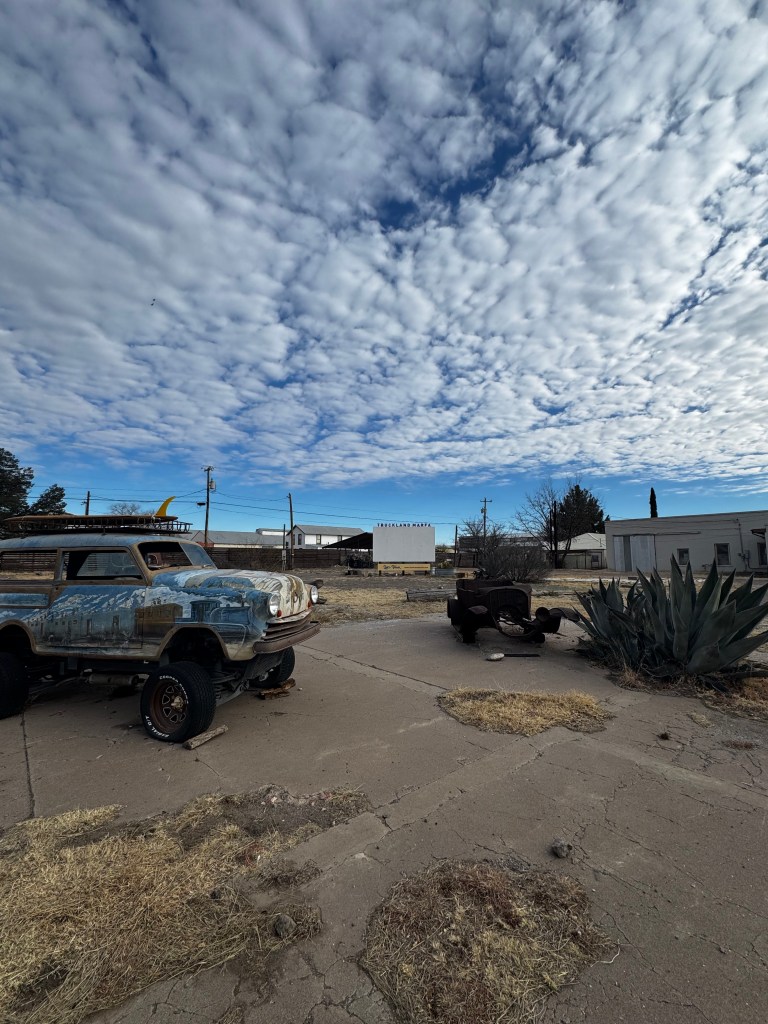
    It was dark by the time we rolled into West Texas and we drove past the famous Prada store installation, doing a U-turn to check it out. It was freezing and empty, the storefront lit up like a ghost. The installation was amusing, but much less so than the inky canopy of sky, festooned with stars. West Texas is one of the least light-polluted places on Earth, and it felt that way, disorienting in its emptiness. I was a little rattled after rolling through a Customs and Border Patrol checkpoint and passing several trucks of armed federal officers on the lookout for anyone they didn’t think belonged on this side of the Mexican border. It’s difficult to grasp that there is so much space and so little compassion.

    I have always been curious about Marfa, although what I knew about the place was quite vague. It was an art town in the middle of nowhere, put on the map by an artist I knew very little about: Donald Judd. When Pele came here last year during his school’s Southwest Studies trip, he said it was cool, although he didn’t elaborate , and Margi also encouraged us to make it a stop on our journey.

    I am so glad we’re here. For a variety of reasons, it feels like kismet. (And that’s not just the two artisanal sotol cocktails talking.) We went on two separate tours today: one of Judd’s residence, La Mansana de Chinati, also known as The Block, and later, in the afternoon, of several of his studios. We ended up having a bunch of excellent conversations with our guides and the other guests, some of whom I initially viewed with wariness or suspicion. I found myself repeatedly marveling at the way Judd studiously created a life for himself according to his principles and beliefs and, as we walked around this town of fewer than 1,200 residents with a ridiculously high concentration of hip, stylish stores, cafes, galleries, and restaurants, I felt excited about moving to another town that is being re-enlivened by the arts.

    After the second tour of the day, we popped into the Marfa Public Library to pee. The place was a little slice of heaven, with little kids filling out worksheets that prompted them to write down a food for every letter in the alphabet, the young librarians offering them fruit roll-ups, and two women catching up on the latest in their lives. Around back, there was a barn with books for sale for between one and two dollars and, even though our car is literally bursting at the seams, we couldn’t help but pick up $20 worth of poetry and mysteries and novels. (I am still in awe of Judd’s library which, in addition to containing thousands of books on a galaxy’s worth of topics, housed a few elegant plywood beds where he could curl up with a book whenever the mood struck him.)

    The night ended with Owen and I sitting in a barrel sauna and, once again, geeking out on the night sky, unknowable and unfathomable.

    During our Judd Foundation tours, we befriended a couple from Forth Worth, an architect and a family counselor who is now training to be a death doula. The architect was exasperated with Judd’s obsession with stripping many of the buildings he acquired down to their original adobe skeleton. The material, he lamented, was woefully unstable, a fact borne out by the fact that a large part of the wall surrounding his La Mansana property had collapsed after a powerful windstorm the year before. Adobe, he continued, was impractical, requiring constant upkeep.

    Later, as we were climbing up the stairs to the exquisite, light-filled apartment Judd created above his architecture office shortly before he died, the death doula talked about how traditionally families would come together to fortify and repair their adobe homes every few years, a ritual that reminded me of a village in Japan that we visited where the straw houses were remade collectively by its residents every year. (She also told me about a lady from Tennessee who is brought in to identify the composition of bricks in historical buildings, which she did by licking them. I would LOVE to meet and interview this woman.)

    For obvious reasons, I have been thinking a lot about impermanence, and now I am thinking about adobe. Like so many of us, the Fort Worth architect is concerned with making things last as long as possible. But, as we all know deep down, that’s the very definition of hubris.

    Judd, meanwhile, was fixated on stripping his surroundings down to their bones, eliminating modern comforts like electrical lights and HVAC systems from the buildings he acquired. He wasn’t interested in shielding himself from the elements, from the storms and the heat and the cold. I’m sure it wasn’t easy for his children growing up in those spaces, but I also think it must have been a gift to become comfortable with discomfort.

    Metaphorically, we are all living in adobe houses, whether we like it or not.